Lucky Ali: The Wanderlust Final Boss
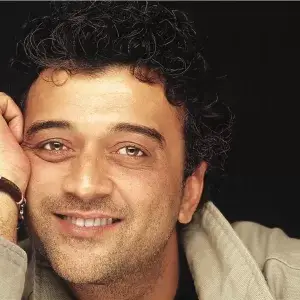
How he resisted clear narrative to make space for drift, repetition, and ambiguity, and therefore created music that lives on through reentry instead of replay.
It’s easy to read Lucky Ali’s videos as stories about travel. Wide roads, grand backdrops , and songs about distance give the impression of escape and self-discovery. But that reading barely scratches the surface.
In hindsight, the visuals were rarely built around destinations. Instead, they were rooted in motion that felt symbolic, dreamlike, and deliberately unresolved. The characters in his videos pass through spaces without introduction or conclusion. Scenes loop. Objects return. And timelines fold into each other.
That’s why years later the phrase, they don’t make music like this anymore doesn’t quite land because his songs were never tied to a moment or an era.
So, if it isn’t about time or place, what is his music all about?
What kind of map was Lucky Ali really following?
The Traveller Appears: Visual Drift & Location as Non-Place
Ali’s music videos offered an early glimpse into solo travel long before it became aspirational. They weren’t shot as tourism bait or designed for mass appeal. On the contrary, they felt quiet, observational, and layered.
Noticeably, he rarely takes center stage in his videos. Instead, he appears as a traveller moving through space, letting the camera observe him in the same quiet way he observes the world.
In Dekha Hai Aise Bhi, this is especially clear. The video opens with a tarot reader pulling the world card and asking “You’ve been here before, haven’t you?” It sets the tone: this is a story about cycles, movement, and returning to the same terrain with new eyes.
Symbols continue to build on each other. A greyhound bus suggests transition. Route 66, dubbed the “Mother Road”, holds cultural weight as a highway that carries people away from struggle through possibility. A Native American man appears throughout the video playing the role of a guide. His presence signals that traveller is never fully alone, even in solitude.
This dynamic continues in Tere Mere Saath, shot in Cuba. The visual follows him in a vintage car doing what he does best: cruising, pausing, observing. He interacts with his surroundings without performing for them. The car, like the Greyhound bus, becomes a symbol of motion and internal navigation.
What stands out in both these videos is the lack of anchors. There is no timestamp, no clear cityscape and no fixed identity. These are what Marc Auge calls non-places, a liminal zone where the viewer isn’t told what to feel but is left to interpret the meaning.
Years later, you can name those places but they were never about the place at all. The nostalgia doesn’t come from a song or an era, it comes from being taken somewhere you still can’t name.
And no other song distorts time, place and era the way O Sanam does.
O Sanam: Lucky Ali and His Symbols
Unlike the undefined geographies of Dekha Hai Aise Bhi or Tere Mere Saath, the setting is clear. Egypt, the pyramids make the location clear. However, the narrative is ambiguous.
In the video he moves across three timelines: as an ancient warlord, a mid-century explorer and a present day musician, all played by Ali.
The visuals are held together by various symbolic cues. A key is received, lost and remembered. A woman in a niqab appears in multiple lifetimes. The structure mirrors what Jung described in Man and His Symbols, where meaning is made through repeated images that signal internal change. The versions of him across different timelines are unified by the same emotional pattern.
In some way, this also feels like a nod to his Sufi grounding, quietly exploring ideas of dhikr (remembrance) and fanā (ego death), where repetition becomes remembrance and disappearance becomes return.
Chronos vs Kairos: How Lucky Ali’s Music Measures Time
At its core, chronos measures time by duration, while kairos measures time by significance, and both are useful in understanding why Lucky Ali’s music continues to resonate nearly three decades later.
The best example of this is O Sanam. Released in 1996, the track continues to circulate without needing revival. It’s relevance isn’t driven by trends, instead it comes from the how and when listeners return to it.

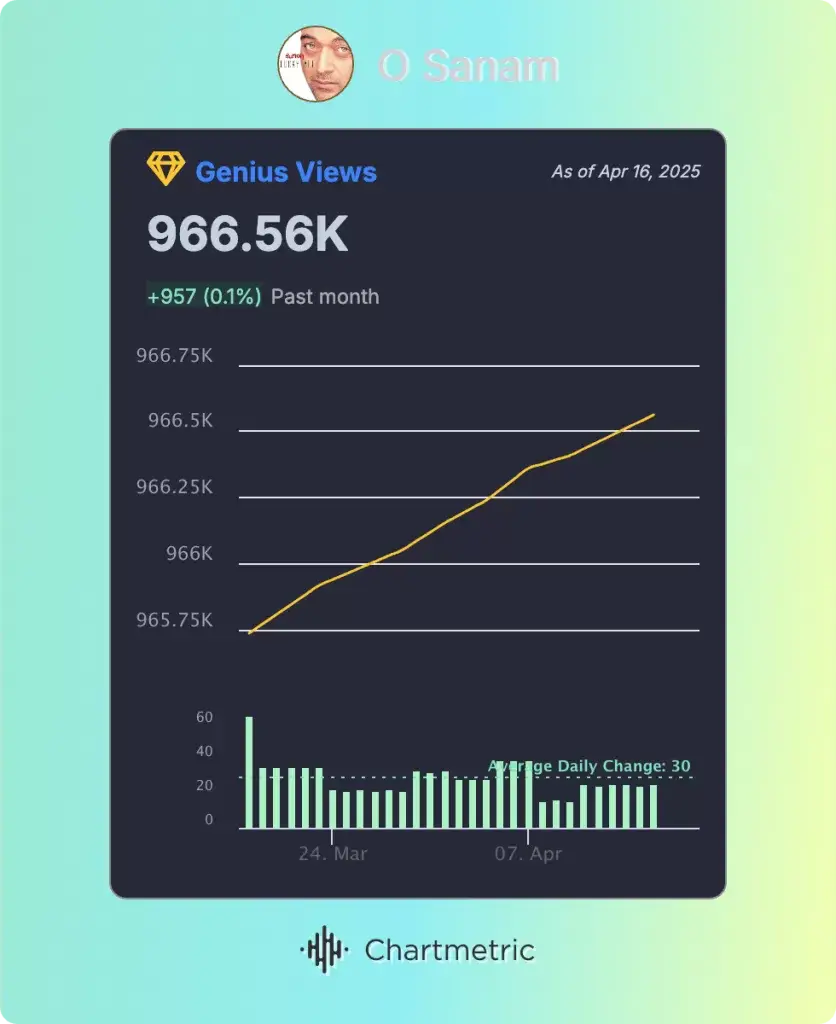
As of April 2025, the track has 967K views on Genius despite having no lyric breakdown or annotation. It can be indicative of listeners still searching for meaning in the song. And on Spotify it rakes in a little over 1M streams on average monthly.
This pattern isn’t unique to one song, it holds across Lucky Ali’s catalog.
In the last 90 days alone, there is a steady activity on his official Youtube channel. It has seen +11K new subscribers, +13M new channel views and averages almost 600K daily video views.

The channel continues to grow without any promotional spikes or viral moments reflecting a listener behaviour that is steeped in return rather than reactivity.
His audience reinforce this pattern, while mostly India- based but with steady engagement from diaspora markets like Bangladesh, Pakistan, the US, and the UK. Fans return when music fits how they feel.


This is what makes chronos/kairos concept useful here. Chronos shows a legacy spanning nearly 30 years, while Kairos explains why his music still matters.
Permission, Not Direction
If this were only about geography the point would be missed entirely. That would reduce what Lucky Ali offered into a location, when what he really builds is a language. His music becomes an emotional map, not to arrive somewhere, but to stay aligned while in motion. An entire generation still wants to leave: the city, the family, the country, the job. Lucky Ali gives us the soundtrack to do that.
He isn’t remembered because he went the furthest. His work isn’t an invitation to live in his world. It gives you permission to build your own, where direction matters less than timing, and travel becomes the act of returning to yourself, again and again, without needing closure.
Leave a Reply