Author: nirukti91

  • Lucky Ali: The Wanderlust Final Boss
    Lucky Ali: The Wanderlust Final Boss

    How he resisted clear narrative to make space for drift, repetition, and ambiguity, and therefore created music that lives on through reentry instead of replay.

    It’s easy to read Lucky Ali’s videos as stories about travel. Wide roads, grand backdrops , and songs about distance give the impression of escape and self-discovery. But that reading barely scratches the surface.

    In hindsight, the visuals were rarely built around destinations. Instead, they were rooted in motion that felt symbolic, dreamlike, and deliberately unresolved. The characters in his videos pass through spaces without introduction or conclusion. Scenes loop. Objects return. And timelines fold into each other.

    That’s why years later the phrase, they don’t make music like this anymore doesn’t quite land because his songs were never tied to a moment or an era.

    So, if it isn’t about time or place, what is his music all about?

    What kind of map was Lucky Ali really following?

    The Traveller Appears: Visual Drift & Location as Non-Place

    Ali’s music videos offered an early glimpse into solo travel long before it became aspirational. They weren’t shot as tourism bait or designed for mass appeal. On the contrary, they felt quiet, observational, and layered.

    Noticeably, he rarely takes center stage in his videos. Instead, he appears as a traveller moving through space, letting the camera observe him in the same quiet way he observes the world.

    In Dekha Hai Aise Bhi, this is especially clear. The video opens with a tarot reader pulling the world card and asking “You’ve been here before, haven’t you?” It sets the tone: this is a story about cycles, movement, and returning to the same terrain with new eyes.

    Symbols continue to build on each other. A greyhound bus suggests transition. Route 66, dubbed the “Mother Road”, holds cultural weight as a highway that carries people away from struggle through possibility. A Native American man appears throughout the video playing the role of a guide. His presence signals that traveller is never fully alone, even in solitude.

    This dynamic continues in Tere Mere Saath, shot in Cuba. The visual follows him in a vintage car doing what he does best: cruising, pausing, observing. He interacts with his surroundings without performing for them. The car, like the Greyhound bus, becomes a symbol of motion and internal navigation.

    What stands out in both these videos is the lack of anchors. There is no timestamp, no clear cityscape and no fixed identity. These are what Marc Auge calls non-places, a liminal zone where the viewer isn’t told what to feel but is left to interpret the meaning.

    Years later, you can name those places but they were never about the place at all. The nostalgia doesn’t come from a song or an era, it comes from being taken somewhere you still can’t name.

    And no other song distorts time, place and era the way O Sanam does.

    O Sanam: Lucky Ali and His Symbols

    Unlike the undefined geographies of Dekha Hai Aise Bhi or Tere Mere Saath, the setting is clear. Egypt, the pyramids make the location clear. However, the narrative is ambiguous.

    In the video he moves across three timelines: as an ancient warlord, a mid-century explorer and a present day musician, all played by Ali.

    The visuals are held together by various symbolic cues. A key is received, lost and remembered. A woman in a niqab appears in multiple lifetimes. The structure mirrors what Jung described in Man and His Symbols, where meaning is made through repeated images that signal internal change. The versions of him across different timelines are unified by the same emotional pattern.

    In some way, this also feels like a nod to his Sufi grounding, quietly exploring ideas of dhikr (remembrance) and fanā (ego death), where repetition becomes remembrance and disappearance becomes return.

    Chronos vs Kairos: How Lucky Ali’s Music Measures Time

    At its core, chronos measures time by duration, while kairos measures time by significance, and both are useful in understanding why Lucky Ali’s music continues to resonate nearly three decades later.

    The best example of this is O Sanam. Released in 1996, the track continues to circulate without needing revival. It’s relevance isn’t driven by trends, instead it comes from the how and when listeners return to it.
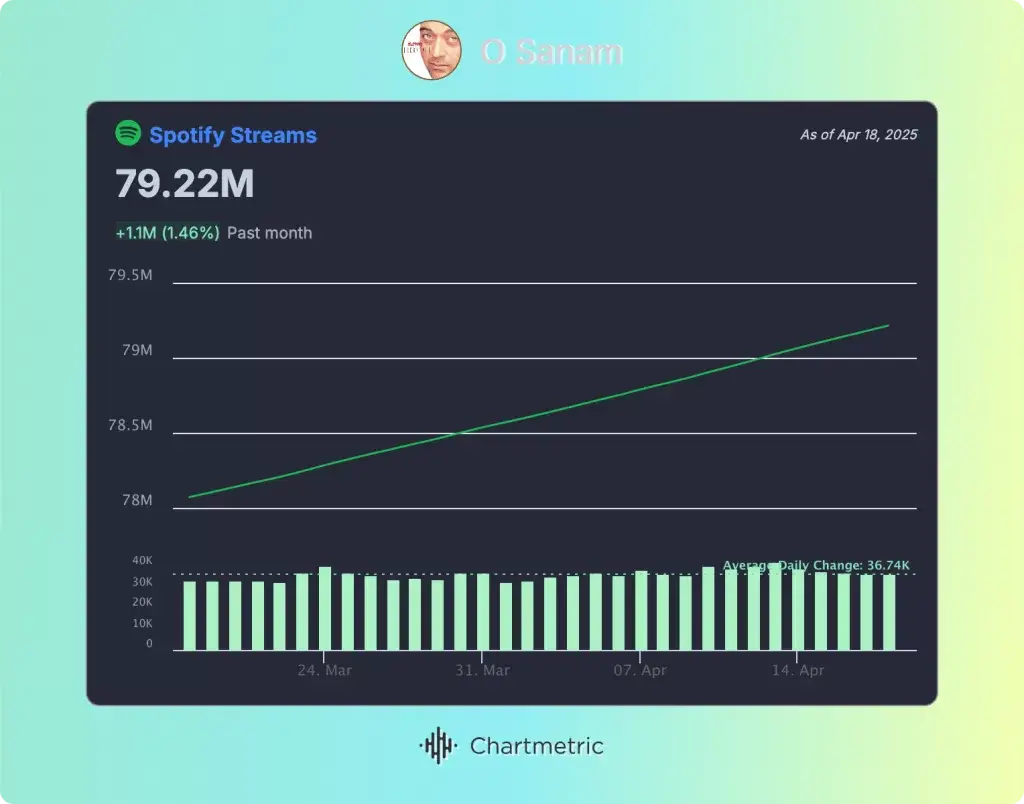
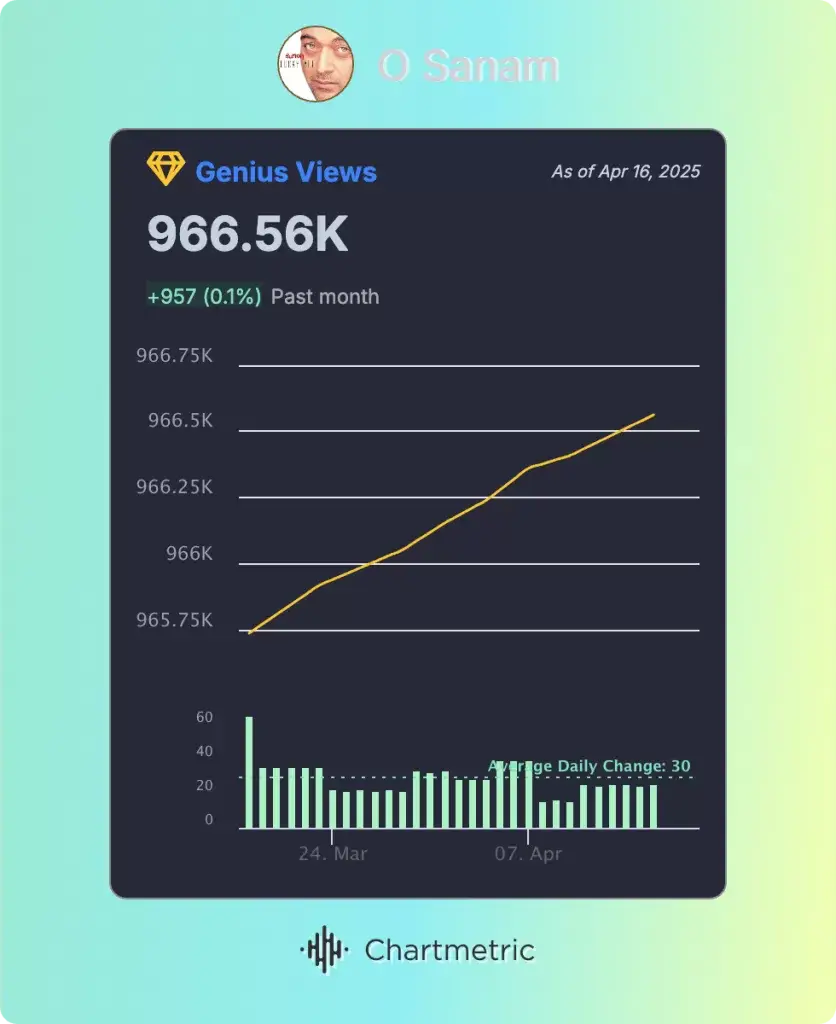
    As of April 2025, the track has 967K views on Genius despite having no lyric breakdown or annotation. It can be indicative of listeners still searching for meaning in the song. And on Spotify it rakes in a little over 1M streams on average monthly.

    This pattern isn’t unique to one song, it holds across Lucky Ali’s catalog.

    In the last 90 days alone, there is a steady activity on his official Youtube channel. It has seen +11K new subscribers, +13M new channel views and averages almost 600K daily video views.

    The channel continues to grow without any promotional spikes or viral moments reflecting a listener behaviour that is steeped in return rather than reactivity.

    His audience reinforce this pattern, while mostly India- based but with steady engagement from diaspora markets like Bangladesh, Pakistan, the US, and the UK. Fans return when music fits how they feel.

    This is what makes chronos/kairos concept useful here. Chronos shows a legacy spanning nearly 30 years, while Kairos explains why his music still matters.

    Permission, Not Direction

    If this were only about geography the point would be missed entirely. That would reduce what Lucky Ali offered into a location, when what he really builds is a language. His music becomes an emotional map, not to arrive somewhere, but to stay aligned while in motion. An entire generation still wants to leave: the city, the family, the country, the job. Lucky Ali gives us the soundtrack to do that.

    He isn’t remembered because he went the furthest. His work isn’t an invitation to live in his world. It gives you permission to build your own, where direction matters less than timing, and travel becomes the act of returning to yourself, again and again, without needing closure.

  • Why Does Mundian To Bach Ke Still Go Hard?

    Why Does Mundian To Bach Ke Still Go Hard?

    Why Does Mundian To Bach Ke Still Go Hard?

    Before Algorithms and Virality, One Track Cracked the Code of Infinite Replay.

    For over two decades, Mundian to Bach Ke has defied the passage of time. It blares from wedding DJs’ half blown speakers, pulses through underground clubs at 3 AM, resurfaces on Tiktok like an inside joke that refuses to die. And every time, the reaction is inevitable. A knee bounces, a head nods, a shoulder rolls. The body responds before the mind catches up.

    This track has existed everywhere. From chaotic house parties to stadium sized victories. It has played in Hollywood car chases, at family functions , inside Berlin nightclubs, and in spaces where no one speaks a word of the language but instinctively knows what to do when the beat drops. Travis Kelce, a man with no prior obligations to Panjabi MC, started dancing on cue at a nightclub in Las Vegas.

    Songs from the early 2000s are supposed to live in throwback playlists , but Mundian to Bach Ke moves across decades, continents, and algorithms effortlessly. 23 years later, this song still feels ahead of its time.

    But why does it still feel futuristic two decades later?

    Is it nostalgia, cultural shorthand, or something deeper?

    The Song That Won’t Retire

    Mundian to Bach Ke refuses to belong to an era. It serves as a cultural shortcut and a signal for Punjabi energy. The beat drops, and the reaction is automatic. Over time, the song has become synonymous with Indian culture, much like butter chicken and mango lassi. However, the truth is far more complex. India’s soundscape is vast, but in the global pop culture lexicon, few tracks have secured a lasting place like this one.

    Even years later, Hollywood keeps reaching for the sound- The Dictator, Slumdog Millionaire and recently another Dev Patel starrer Monkey Man.

    Outside celluloid, the track travels seamlessly to football stadiums.

    Spotify Stream for Mundian to Bach Ke

    And online streaming numbers confirm the reality-Mundian To Bach Ke has crossed 97 million plays on Spotify, gaining 1.8 million streams in the past month alone, with a steady daily increase of 62.94K. The consistent growth is indicative of sustained listener interest driven by discovery and playlist engagement.

    But beyond where the songs are played, the secret sauce to its longevity is how the song is built.

    The Science of a Timeless Hit:

    Amidst the overproduced pop hits and formulaic club bangers of the early 2000s, Mundian To Bach Ke stood out by seamlessly blending traditional Punjabi folk instrumentation with a hypnotic electronic bassline, creating a track that felt both deeply rooted and globally futuristic.

    A song’s longevity often depends on production and some tracks remain untouchable. Music follows patterns, and every track that carves a space in pop culture can be broken down to a science. Beats per minute shape energy. Structure determines adaptability. A song engineered to move across time and genres lasts longer.

    BPM (beats per minute) plays a key role in versatility, influencing danceability, commercial appeal, and cross-genre adaptability. Club tracks typically sit between 115–130 BPM, a range that keeps bodies moving effortlessly, yet Mundian To Bach Ke lands at 98 BPM, slightly lower than the club standard but still within a range that feels fast without being overwhelming. Songs between 95–105 BPM sit in a pocket that works across multiple genres, adaptable enough to blend into hip-hop, reggaeton, and club edits without feeling out of place.

    With 83.39K SoundCloud streams and a 44,977% increase, DJs and underground remix culture continue to keep the track in rotation, a testament to its adaptability across different styles and settings.

    This BPM range lands in the perfect head-nodding rhythm, not too fast for hip-hop, not too slow for the dance floor. Dr. Dre’s Still D.R.E. (94 BPM) and 50 Cent’s In Da Club (103 BPM) both exist within this space, giving DJs the flexibility to adjust tempo without losing the song’s core energy. A track sitting at 98 BPM moves seamlessly between hip-hop (90–100 BPM) and house music (120 BPM), making it an easy choice for club sets.

    Jay-Z performing Mundian To Bach Ke at Glastonbury

    So, when the Jay-Z remix dropped in 2003,it was a match made in sonic heaven. That fusion amplified the track to an entirely new level, bridging hip-hop and Bhangra. Extending its reaching far beyond its original audience.

    This BPM range is synced for mass media. Ad commercials, TikTok dances and every high energy montage where Hollywood wants to signal “something to do with India” Tone deaf? Often. Impactful? Undeniably.

    Beyond tempo, the track’s three note riff forms its backbone. The track is a fusion of traditional instrumentation and electronic influences that sounds futuristic even today. Panjabi MC sampled the bassline from Knight Rider, a theme composed for a sci-fi/action aesthetic designed to sound suspenseful and ahead of its time.

    • The bassline carries a natural groove that blends well with percussive beats, allowing the Bhangra rhythm to bounce without clashing
    • Knight Rider was a cultural phenomenon in the ’80s and ’90s
    • Even listeners who don’t immediately recognise the connection subconsciously associate the beat with “cool action hero energy”

    This recognition is why the track works so well across media formats. The Sonic DNA makes it instantly cinematic. The tracks’ ability to transcend time and genre mirrors the longevity of tracks like Gasolina (2004), which introduced reggaeton to the global mainstream.

    However, Mundian To Bach Ke predates and arguably paved the way for such fusions, proving that a regional sound, when paired with the right production, can break cultural and geographic boundaries to become a lasting cultural phenomenon.

    However, a great sound alone doesn’t make a song immortal. To understand why this song refuses to die, we need to look at how it moves through culture.

    The Soundtrack to “Punjabi Energy”

    The rise of Mundian to Bach ke wasn’t accidental. It was the result of years spent refining a sound that could move between worlds. Panjabi MC spent the late ’90s experimenting with ways to fuse Punjabi folk with hip-hop and electronic production, creating something both rooted in tradition and primed for reinvention.

    The track first found life in the British Asian club scene, radio stations, and family functions, becoming a staple in underground circles across the UK. In the early 2000s, the South Asian disaspora gave it momentum long before mainstream audiences caught on.

    Then came the breakthrough. A track that started in tight-knit diaspora spaces had crossed into the European charts. By 2002, it had climbed into the UK Top 5, reaching No. 1 in Italy, Hungary, Belgium, and Greece.

    The turning point came in Switzerland, where Jay-Z heard the track ratlling the walls of a nighclub. Instantly recognising its power, he recorded a verse over the beat, creating the 2003 remix, Beware of the Boys. The remix did more than extend the song’s life. It introduced Mundian To Bach Ke to hip-hop audiences, pulling it further into mainstream Western music. The track became an international sensation , re-entering the charts and securing Panjabi MC’s place in music history. Then in 2008, Jay-Z performed the remix live at Glastonbury festival.

    But this moment wasn’t happening in a vacuum. The song’s rise came in a post 9/11 world, where South Asian and Middle Eastern communities in the West faced intensified scrutiny. Racial profiling had spiked and mainstream visibility for these communities often came through a lens of suspicion. At a time where cultural perception skewed toward fear and division, here was a sound that had positive representation.

    The meteoric rise of the song continued well beyond the 2000s. In 2018, Beyonce and Jay-Z danced to the track during the European leg of On The Run II, reigniting curiosity and sparking a fresh surge in playlist additions. As recently as 2024, Dev Patel’s Monkey Man trailer featured the song , proving yet again that track remains the go-to sound for high energy action sequence.

    A song that began in the UK Punjabi club circuits now sits at the intersection of global cinema, sports, and viral media .

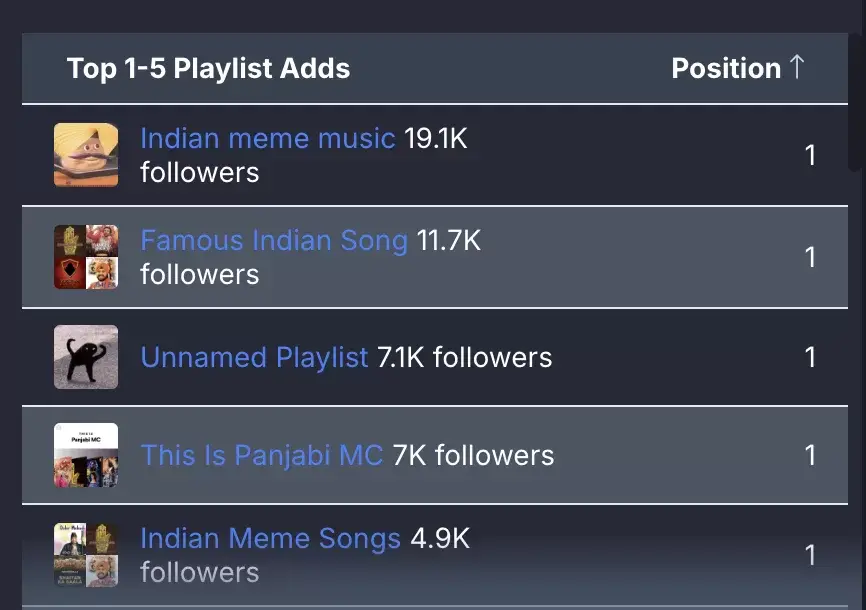
    The top playlists adding the song include Indian Meme Music (19.1K followers), Famous Indian Songs (11.7K), and This Is Panjabi MC (7K). Making the track an integral part of internet culture.

    Streaming, social media, and viral trends haven’t simply kept Mundian to Bach Ke alive. They have accelerated its reach, pulling it into spaces that didn’t exist when it was first released.

    How the Internet Keeps This Track Alive: The Data Behind Its Comebacks

    Mundian to Bach ke existed before TikTok, before playlist optimisation, before viral charts dictated success. Yet the track moves like a built-for-streaming hit-loopable, with a high danceability factor, and an impossible to ignore drop.

    Songs engineered for short term virality explode and disappear. Decades later, this beat still finds a way into clubs, stadiums, and content feeds, proving that chasing trends doesn’t always ensure longevity.

    Punjabi music has always traveled, but this track built a bridge. Bollywood leaned on Punjabi beats for instant euphoria, but Mundian to Bach Ke packaged that energy for the world, creating a sonic reference point mainstream audiences instinctively recognise.

    Algorithms amplify what audiences crave, and the data confirms the momentum.

    Shazam and TikTok: Why New Listeners Keep Finding This Song

    A high number of Shazam searches proves that people continue to hear the track in new contexts and want to know more. Super Bowl placements, film trailers, and viral content keep triggering searches, showing real-time discovery rather than passive replay.

    Short, high-energy loops drive TikTok engagement. Mundian To Bach Ke fits that formula, showing a sharp increase in posts over the past year. The structure allows seamless editing, remixing, and adaptation across different content styles.

    YouTube Views, Comments, and the Playlist Effect

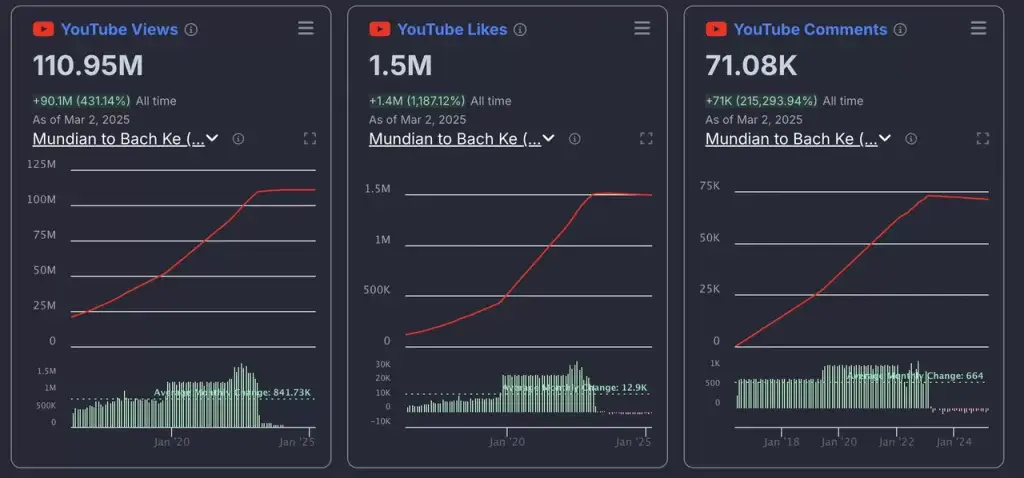
    A steady increase in views, likes, and comments suggests that the track remains in regular rotation rather than experiencing short-lived spikes. Listener engagement reflects active discovery rather than nostalgia-driven revisits.

    Listener Sentiment and Viral Appeal

    Comment sections reinforce the song’s lasting impact. The most upvoted responses describe it as a timeless staple rather than a throwback hit.

    Many early 2000s tracks fade into passive listening habits, only resurfacing when a trend revives them. Mundian To Bach Ke stays in circulation through consistent engagement, continued discovery, and algorithm-driven reach.

    Why Do We Keep Playing This Song 20+ Years Later?

    Through these shifting sands of time, Mundian To Bach Ke always finds its way back-because it never truly leaves. From Boomers to Gen Z, stadium crowds to club regulars, Indians to non-Indians, everyone gets pulled onto the dance floor eventually.

    Perhaps that is the genius of it. The track endures because it refuses to belong to any one era or anyone for that matter, slipping effortlessly from decade to decade, always moving to its own rhythm.

    When this track comes on, no translation is required, no persuasion required. The only undeniable fact is that when that beat drops, the body obeys.

  • What Coaching Centers Won’t Teach You, Online Strangers Will

    What Coaching Centers Won’t Teach You, Online Strangers Will

    The best exam prep advice isn’t found in classrooms. It’s on Reddit, Quora, Pinterest, and other online communities.

    The air in Mukherjee Nagar is thick with chai fumes and crushed dreams. It’s 5 AM, and students are already queuing outside coaching centers, clutching tattered notebooks, their eyes heavy with the weight of unfinished mock tests.

    For many, enrolling in coaching classes is about signalling intent. In India, parents don’t ask ‘Are you preparing for UPSC?’ They ask, ‘Which coaching classes are you going to?’ A ₹1.5 lakh course fee is seen as investment rather than expense. A down payment on a secure future.

    But what happens when the promise doesn’t deliver?

    Inside packed classrooms, the faculty member drones about the Mughal administration. Some students take notes furiously, others drift into daydreams, already overwhelmed. By evening they will return to their cramped rooms, staring at pages they barely remember reading.

    The realisation dawns that coaching is not enough. The real battle is fought alone, in late-night cramming sessions fueled by Maggie and silent suffering.

    At midnight, scrolling through another set of ‘most important current affairs’ PDFs, fatigue sets in. A Google search leads to a Reddit thread ‘Last minute tips for UPSC Prelims.’ Hundreds of comments, insights, strategies, even memes.

    A thought lingers: could this be better than coaching?

    Why Coaching Centers Still Dominate Exam Prep

    Coaching centers in India have grown into a ₹58,000 crore industry, expected to double by 2028. Once meant to support school education, they have now replaced it, turning schools into mere formalities. Parents view coaching classes as essential for success, investing large sums in hopes of securing top rank.

    While these institutes provide structure and expert guidance, they often encourage rote learning over independent thinking. The environment is highly competitive, leading to stress and burnout, especially in cities like Kota. In 2023, nearly all NEET rankers attended coaching, reinforcing the belief that self-study isn’t enough.

    However, some students begin questioning this system. They turn to online platforms. Reddit, Quora, Telegram, searching for alternative ways to prepare.

    How Reddit & Quora Are Changing Exam Prep

    As coaching centers prioritise competition, many aspirants turn to online communities for guidance and support. Platforms like Reddit, Quora, YouTube, and Pintrest offer alternative ways to learn.

    Reddit’s exam specific subreddits enable anonymous discussions, while Quora provides detailed, experienced-based answers. Youtube’s video tutorials make complex topics easier to grasp, and Pintrest simplifies study materials into digestable visual formats.

    Beyond study resources, these platforms fill an emotional gap. Offering encouragement, shared struggles, and practical strategies that traditional classrooms often lack. Research suggests that peer-to-peer learning enhances engagement and retention, making these digital communities a valuable complement to structured coaching.

    For many aspirants, a late-night Reddit thread or Quora answer marks the shift from passive learning to an interactive, self-driven approach.

    Reddit, Quora & Pinterest: The Real Study Hubs

    With traditional coaching failing to address emotional and psychological needs of aspirants and SEO driven search results cluttered with generic, keyword-stuffed blogs, students are left overwhelmed and directionless. Instead of real insights, they waste hours sifting through recycled content that says everything but teaches nothing. This is where platforms like Reddit, Quora, and Pinterest deliver what aspirants really need. Authentic experiences, real problem-solving, and a community that gets it. And it’s free.

    Reddit serves as a strategy hub for students. Subreddits like r/UPSC, r/NEETJEETARDS, and r/CAT attract thousands of aspirants sharing daily prep updates, exam hacks, and book recommendations.

    Interestingly, r/IELTS lacks a large dedicated subreddit, but communities like r/IndiaStudyAborad and r/ImmigrationCanada fill this gap, showing how test prep intersects with migration goals.

    AMAs (Ask Me Anything) are big engagement drivers bringing together users who can interact with experts and celebrities directly. One of the most upvoted AMA on r/UPSC is by an IAS officer with 1.3K upvotes, offering unfiltered experience based insights, stress management tips, advice on career paths.

    IAS OFFICER AMA

    Another way Reddit stands out is by how most subreddits are often moderated by users themselves. Making it self-organising. Moderators ensure strict posting rules, no low effort posts, verified resources and creating flairs for easy navigation. This ensures quality content.

    Quora is another great source to seek top exam related answers. Personal narrative questions like “How I cracked JEE Advanced without coaching” to listicle and bullet points for queries like “Top 10 books for SSC CGL” and time management and menemonics related anwers to “Shortcut formulas for NEET physics” inviting community driven learning and knowledge sharing.

    Pinterest’s role in the India exam prep space remains underdeveloped, though its infographics, mind maps, and desk set up aesthetics are popular.

    Pinterest’s format holds potential for organising UPSC framework, NEET biology diagrams, and CAT quant formulas into digestable visuals.

    While certainly not a replacement for traditional coaching, these platforms create a safe space built on collective wisdom, shared struggles, and a sense of belonging. In a system that reveres guru-shishya hierarchy, they offer a peer driven space where knowledge flows freely, support is mutual, and a shared laugh is as valuable as a game plan.

    How an Online Community Helped Me Pass

    The Indian education system tells students what to study, but never how. Tests are treated as the ultimate markers of intelligence, but in reality, they measure how good one is at taking tests. The rigid learning structure left little to no room for non-linear learners like me. I struggled with this system.

    Years later, when I decided to take on the Project Management Professional (PMP) Certification, a four hour exam known for its complexity. I knew I needed an approach that worked for me, not against me.

    That’s how I found r/PMP. This community provided free, well organised resources, practical hacks, and emotional support. When my first application was rejected, the community came through with step-by-step guidance from strangers who had been through the same. But beyond the tangible outcome of good grades, it rebuilt my confidence and helped me enjoy learning again.

    For former UPSC aspirant Elias Moosakutty, online communities played a similar role. “Coaching helped but only when I knew exactly what I needed help with,” he told me. “The real relief was online spaces where we shared notes, writing practice, even housing advice. These platforms were a support system, especially for those moving to new cities alone who did not know the language.”

    YouTube, AMAs & the Rise of Digital Mentors

    With traditional coaching losing their monopoly on mentorship, digital educators and AMAs (Ask Me Anything Sessions) have stepped in to fill the gap. Influential Youtube creators like Vijender Singh Chauhan (Please Sit Down, 1.8M subscribers) for UPSC related content and Alakh Pandey AKA Physics Wallah for NEET offer free, structured learning with high engagement. Their content is practical, accessible , and deeply trusted in the exam prep community.

    Subreddit and online learning communities saw spikes in activity during COVID-19 when schools shut down and exams were delayed. It reflected a broader shift toward digital first, and peer driven learning.

    r/UPSC

    Educational creators are transforming into full-fledged learning ecosystems, fostering community-driven, peer-supported education.

    Misinformation & Overload in Exam Prep Communities

    While online communities empower aspirants, they come with structural limitations that impact usability and information reliability.

    One key challenge is navigation. Platforms like Reddit and Quora rely heavily on Google Search for discoverability. It’s often easier to find an answer by searching “UPSC notes Reddit” than by using Reddit’s own search function. Within these platforms, however, sorting through discussions, outdated threads, and fragmented resources can be a task. The gap is that valuable information exists but it isn’t always accessible.

    Consideration should be given to building better educational community structures where knowledge is organised for long term access. Platforms with big communities should improve searchability, encourage expert contributions, and foster structured learning environments beyond discussion threads

    The Rise of Community Learning

    Community driven learning is the future, but there is still room to grow.

    Tech companies are beggining to step in. YouTube’s NCERT partnership will make quality resources accessible in 29 languages, while Duolingo’s English Test (DET) leverages AI to offer affordable language assessment. These initiatives prove that education doesn’t need to be locked behind paywalls.

    Fostering stronger learning communities. By inviting experts, improving discoverability, and encouraging open collaboration, platforms can make knowledge-sharing more inclusive.

    The future of exam prep is built on connection, accessibility, and shared learning.

  • Localisation is Strategy, Not Semantics

    Localisation is Strategy, Not Semantics

    In India, content must reflect the language of trust, identity, and belonging.

    India is a linguistic giant. The 2011 Census recorded 121 languages spoken by 10,000 or more people, and over 19,500 distinct mother tongues were reported. The people’s linguistic survey of India estimates more than 780 actively spoken languages, making India one of the most linguistically diverse countries in the world.

    For global brands, this diversity represents both an incredible opportunity and a daunting challenge In a market, where regional marketing is on the rise, the “one-size-fits-all” approach is no longer an approach that works. Content strategies must now balance the intersection between language, culture, and context to connect with India’s polyglot audience.

    Yet, localisation falls short. Brands equate it with mere translation, overlooking the importance of cultural nuance, emotional resonance and context. Youtube ads in Mumbai assume Marathi is the preferred language, ignoring the region’s multi-lingual demographics. Similarly, platforms like Netflix and Prime offer subtitles in multiple languages but often miss the subtleties that make content truly relatable.

    This failure to localise deeply has its consequences. Poorly adapted content or over-reliance on the assumption of widely spoken language can alienate audiences, erode trust and harm brand loyalty. For instance, Google Assistant’s initial limitations in supporting Indian languages reduced its usability among non-English speakers.

    Localisation in India is an evolving process and it requires continual support and investment. It cannot truly be “complete” because it is complex and nuanced. This article explores why localisation matters for content strategy, how it must evolve, and the lessons brands can learn.

    Localisation Beyond Translation:

    Localisation is more than just translation. It is adapting content to reflect cultural and contextual nuances. While translation converts words, localisation ensures that you understand your target audience.

    For instance, transcreation, which creatively adapts content to evoke specific emotions or persuasive effects, is critical in a market like India. This process is costlier than traditional translation. However, it pays off in the long run by building stronger connections with diverse audiences.

    So why do brands fall short of true localisation?

    One reason being, rigid reliance on formal language fails to reflect code switching habits in India, where users seamlessly shift between languages. The other is inconsistent language integration where product interfaces are translated but it neglects crucial touchpoints like FAQs and customer support. This alienates users and diminishes trust.

    Cultural relevance directly impacts audience engagement. ShareChat thrives by delivering vernacular content in over 15 Indian languages, dominating tier-2 and tier-3 markets. Similarly, Spotify’s regional language music curation helped it compete with established players like JioSaavn and Gaana.

    Conversely, LeEco’s failure to adapt its content strategy for India demonstrates the high cost of overlooking cultural nuances.

    True localisation integrates language, culture, and context to create content that connects, engages, and retains audiences.

    Gaps in Technology for Indian Localisation:

    Despite India’s vast multi-lingual diversity, AI powered localisation tools remain limited in their ability to handle the country’s full range of languages and dialects. While AI models like ChatGPT have improved their multilingual capabilities, they still struggle with critical distinctions, such as differentiating between Bengali and Assamese. This lack of precision affects automated content strategies, making it difficult for brands to scale localised content effectively.

    One of the biggest barriers to AI-driven localisation is data scarcity. Many Indian languages, particularly those classified as low-resource languages (such as Bodo and Sindhi), lack sufficient digital data for effective AI training. Building datasets requires collaboration with linguists, local institutions, and native speakers: a resource intensive process that is often overlooked.

    The consequences of excluding lesser-spoken languages extend beyond accessibility. It prevents technological advancements in Indian linguistic AI, leading to digital marginalisation. Furthermore, neglecting these languages threatens cultural preservation, as fewer people can access digital content in their native tongue. For content strategists, this gap represents an untapped opportunity: one that brands willing to invest in deeper localisation can leverage for competitive advantage.

    Lessons from Duolingo and Music Metadata:

    Duolingo introducing English for Tamil speakers is a strong step towards linguistic inclusivity.

    Even better? They’ve woven in cultural touchpoints, making lessons feel familiar and engaging. From everyday phrases to locally relevant contexts, it’s a nudge in the right direction.

    But there’s still room to grow. Imagine Tamil-to-Hindi, Tamil-to-Telugu, or other regional pairings: acknowledging India’s multilingual reality. Expanding beyond English would truly unlock the full power of language learning for Indian users.

    Similarly, music streaming platforms rely on metadata tagging to power discovery, yet they still operate within a Western classification system. Indian music is often miscategorized, with diverse regional genres lumped under broad labels like ‘Pop’ or ‘Folk.’ Platforms that refine their metadata to recognize linguistic and genre fluidity such as bilingual tracks or fusion genres will gain a stronger foothold in India’s competitive music landscape

    For true localisation, platforms must move beyond translation and integrate cultural intelligence, ensuring that learning feels relatable and content discovery is intuitive, inclusive, and reflective of India’s linguistic and cultural depth.

    Conclusion:

    Localisation in India is not a one-time effort but an ongoing process that requires continuous adaptation. A simplistic translation approach fails to engage diverse audiences. Brands must invest in regional datasets, collaborate with linguists, and embrace community driven localisation to ensure authenticity.

    Open source initiatives can further democratise language technologies, making localisation efforts scalable and inclusive.

    To succeed, brands must move beyond translation and treat localisation as a dynamic, participatory strategy. Crowdsourcing efforts, such as user submitted slogans, regional storytelling, or interactive ad campaigns, can deepen cultural resonance. Amul’s iconic user generated ads exemplify how co-creation strengthens trust.

    Hindi and English maybe considered India’s default business languages, but they do not represent the full spectrum of the country’s linguistic reality. Millions of users prefer consuming content in their native tongue.

    Brands that thrive will be those that listen, adapt, and co-create, treating localization not as a value-add but as a foundation for a successful long term strategy.

    Words matter, but context matters more and in India, content strategy demands both.