Festivals, Feeds & Fandoms: How India’s Internet Keeps You Hooked
India’s Visceral Pride Is the Ultimate Growth Hack for Global Platforms.
There is no off-season in India’s digital culture. Festivals blend into each other, fandoms sustain the gaps, and when there is nothing to celebrate, Indian cinema and Cricket take over. Engagement doesn’t peak and vanish. It shifts, keeping platforms and audiences in a constant loop.
Because there is no pause, India’s digital culture runs on a flywheel fueled by cultural moments and mobile-first consumption. With over 750 million internet users, 67% streaming music on their phones, and Whatsapp serving as both news source and a meme machine, engagement is immediate and participatory.
Unlike the West, where algorithmic feeds and scheduled consumption drive trends, India’s digital landscape is shaped by community driven virality.
Let’s take Garba Queen Falguni Pathak as example, her music surges in September, reaching three million daily views during Navratri. It’s more than a festival, it’s an event culture built on participation.
WhatsApp groups flood with Garba invites, reels showcase dance routines, and YouTube algorithms resurface old classics. Engagement isn’t passive. It’s communal, crowd-driven, and sustained beyond the festival flowing into wedding season.
This is not a cycle that starts and stops. It feeds itself. Content, culture, commerce move in tandem in India.
Festivals, Cricket, Bollywood. India’s Cultural Calendar Never Slows Down.
India doesn’t have viral moments. It has movements. Festivals turn into digital phenomena, fandoms into full scale industries, and subcultures into mainstream conversations.
Diwali floods social media with GRWM videos. Wedding turns into viral spectacles: Anant Ambani’s pre-wedding alone dominated social media.
The IPL lasts months, sustaining conversation with memes, trades, and fantasy leagues. Bollywood releases, weddings, esports, and streetwear culture create year-round engagement.
Fandoms drive deeper retention. K-pop groups like Stray Kids & BTS have dedicated Indian fanbases creating remixes, lore videos, and dance covers. Local creators like Abhishek Malhan and Samay Raina have transformed digital participation into cultural moments. Even niche communities thrive: UPSC aspirants, regional beauty influencers, and modest fashion creators dominate engagement cycles.
India’s cultural calendar and its relentless fandoms lay the groundwork for global platforms to step in, amplify, and shape the pace of digital engagement.
Spotify, YouTube, and Instagram decide what’s next before you do
Indian festivals serve as a massive engagement touchpoint on digital platforms. Platforms manufacture engagement before users even start searching. This is a strategic decision to maximise content velocity, retention, and monetisation
Spotify’s #PacketMeinPlaylist campaign during Holi is a clear example. This campaign directed users to a pre-made Holi playlist. It was not just a response to the festival, it was an engineered moment of discovery.

Youtube does the same with its featured playlist. These are pre-loaded content pipelines that ensure music finds users before they start searching.
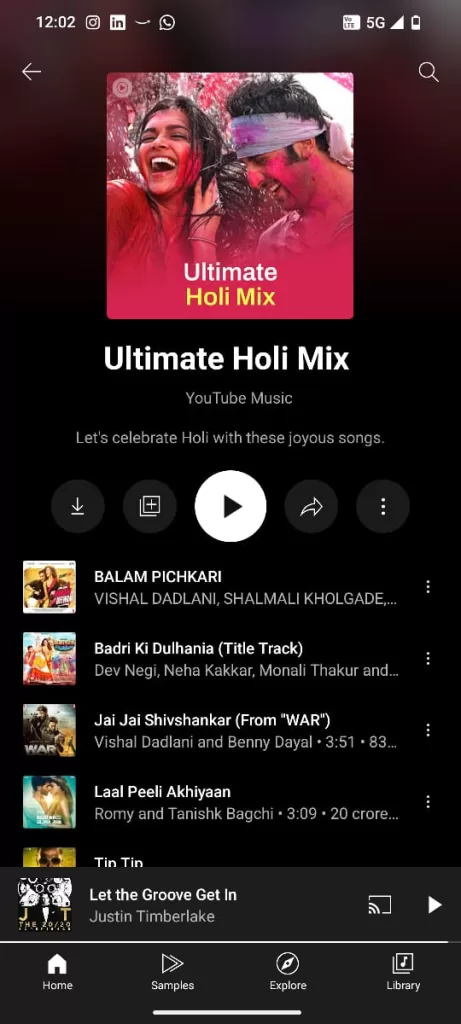
For instance, search data for “Balam Pichkari” shows a clear pattern. The song sees a massive spike in searches right before and during Holi. Users do not spontaneously remember the song every year at the same time. Platforms surface festival related content in advance, triggering social reinforcement through memes, reels, and brand campaigns. Users see it in their feed, their friends repost it, and suddenly, they are searching for it.

However, platforms do not rely only on algorithms. They also use influencers to drive engagement before peak festival moments. Brands collaborate with creators to seed festival-related content early. Maybelline sponsors Diwali make up tutorials and Sugar cosmetics works with regional influencers during Onam and Dura Pujo
These campaigns push cultural moments into the digital mainstream before audiences even realise they are trending.
By the time festivals arrive, engagement is already pre-engineered. What looks like an organic surge in interest is actually a carefully orchestrated cycle. Indian festivals fuel short-term spikes, but the same mechanics drive longer engagement loops through fandoms like reliable favourites: Bollywood, and cricket.
India’s digital economy is not seasonal. It runs on an always-on flywheel of cultural moments.
Bollywood weddings, K-pop remixes, and cricket hysteria turn India from a consumer to an amplifier.
Fandom in India is a force multiplier, and the world is catching on. Indian content: food, music and even everyday life racks up easy views.
Logan Paul and Mr. Beast’s India visits aren’t just cultural handshakes. They are business moves. The next billion internet users are here, and platforms that understand what makes Indian fandoms different will own the future.
Unlike the West, where fandoms are confined to Reddit threads and discord servers, Indian fandoms unfold in public. The initiation into anime or K-pop often happens through Bollywood. Through that first time, a Naruto fight sequence is compared to the Mahabharata, or when an anime character says something that sounds straight out of a Sharukh Khan monologue.
Indian fans operate from a level of visceral pride. They don’t adopt, they translate, reinterpret and bring global phenomena into an Indian context.
Diljit Dosanjh’s debut at Coachella validates this. When he yelled “Punjabi aa gaye oye” (Punjabis have arrived) it was more than just a moment. It was a declaration. Indian fandoms take representation seriously because they aren’t just watching it, they are living it.
Beyond artists, creators act as cultural amplifiers too. AjjuBhai’s face reveal drew 35 million views and 4 lakh comments. Samay Raina’s chess content racked up 1.5 billion views. Fukra Insaan turned Abhishek Malhan from a Youtuber to a runner up on Big Boss. They are proof that fandoms don’t operate in isolation, they spill over into mainstream influence.
Platforms know and understand the power of Indian fans and strategically employ it for long-term retention and stickiness.
There is no better growth lever than a fandom that never logs off.
Diwali, IPL, and billion-dollar fandoms drive ad rates through the roof.
Brands follow attention. In India, festivals and fandoms turn it into unmatched scale and spending power.
As per this report by Dentsu, the Indian digital ad market set to reach a whopping Rs 59,200 crore by 2025 end
Festivals and fandoms dictate where brands place their bets, driving ad costs to peak multiples.
Diwali sees Youtube CPMs surge from ₹150 to ₹400, Instagram ad rates triple, and movie releases command six figures per 10 second TV spots. More than reach, brands are paying for participation.
Fandoms are just as critical. Samay Raina’s India’s Got Latent proves that brands are willing to take risks on creators with engaged followings, even if the humour is edgy. Spinny, a used-car marketplace, sponsored an episode of the show while making fun of sponsorships itself.
Historically, India has been a price-sensitive market. But when culture drives commerce, spending follows. The highest ad returns don’t come from broad demographics, they come from communities that self-sustain.
Festivals and fans together are India’s most valuable revenue generator and platforms recognise this.
Logan Paul and MrBeast cracked the code. So why hasn’t India?
The world has figured out the value of Indian audiences. A single video of an American influencer eating butter chicken racks up millions of views. Cristiano Ronaldo’s debut on Youtube was heavily powered by Indian viewers.
Logan Paul and Mr Beast are here because they know India is the next frontier of digital growth.
But if global creators and brands understand this, why hasn’t India fully leveraged it for itself? The demand exists. The platforms exist. Yet, while the world watches India, Indian artists and creators still struggle with visibility on the global stage.
What will it take to reverse this pipeline?
Platforms, brands, and global creators recognize India’s scale and influence. They tap into it, monetise it, and engineer content strategies around it. But while India fuels engagement worldwide , it rarely dictates it. Festivals and fandoms have proven their power to sustain engagement and drive monetisation
The world knows India as a market, but not yet as a cultural powerhouse. That is the gap. If India shapes digital culture. The next step is ensuring it owns the narrative.